
Lote 24
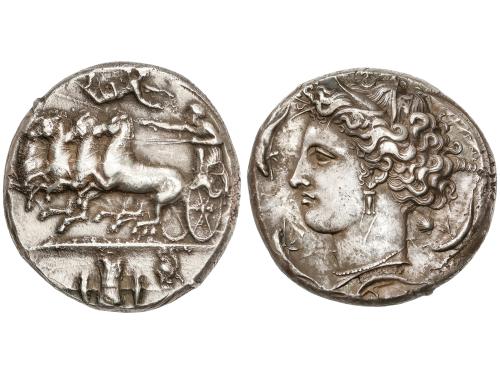
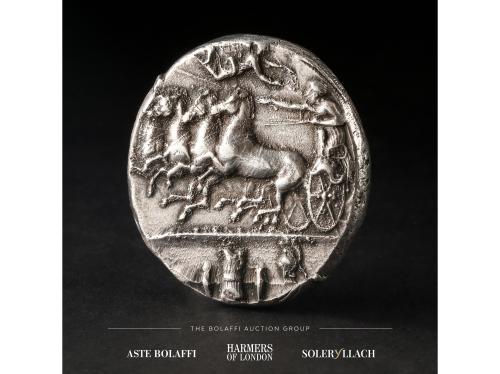
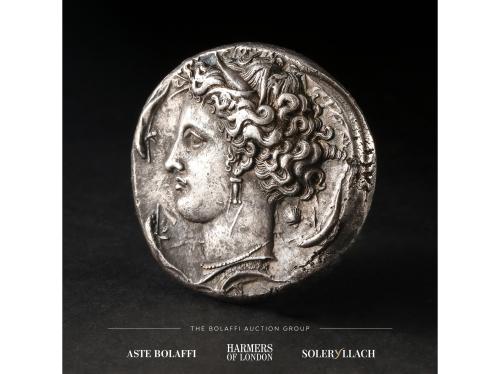
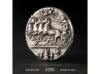
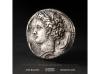
MONEDAS GRIEGAS. Decadracma. 405-367 a.C. Obra sin firmar al estilo de Euaineto. DIONISIO I. SICILIA. SIRACUSA. Anv.: Auriga, con el kentron en la mano derecha extendida y las riendas en la izquierda, conduciendo cuadriga a izquierda; arriba, Nike volando a derecha, coronando al auriga con una corona que sostiene en sus manos extendidas; abajo, una línea de exergo de gran grosor, escudo, grebas, coraza y yelmo ático con cresta, todo ello unido por una lanza horizontal. Rev.: Cabeza de Aretusa a izquierda, con una corona de espigas, un pendiente de tres hileras y un collar de perlas; arriba leyenda: (ΣY-PA-K-O-ΣIΩN). Concha detrás del cuello y cuatro delfines nadando alrededor. 43,13 grs. AR. Los decadracmas griegos de Sicilia, acuñados principalmente en Siracusa a finales del siglo V a.C., representan la cumbre del arte numismático de la Antigüedad. Estas imponentes monedas de plata, con un peso aproximado de 43 gramos, no solo tenían un inmenso valor económico, sino que servían como poderosos instrumentos de propaganda política y militar tras las victorias sobre cartagineses y atenienses. En su anverso, muestran con asombroso detalle una cuadriga al galope coronada por la diosa Nike, capturando el dinamismo y la tensión de las carreras de carros. El reverso presenta el bellísimo perfil de la ninfa Aretusa rodeada por cuatro delfines, una obra maestra de la tridimensionalidad en relieve creada por grabadores legendarios como Choirion, Euainetos o Eumenos, quienes firmaban sus troqueles con orgullo. Hoy en día, su escasez, su impecable factura técnica y la elegancia de sus proporciones los convierten en las piezas más codiciadas y admiradas por coleccionistas de todo el mundo. Pátina. Muy rara. EBC-./ Dekadrachm. 405-367 BC. Sicily, Syracuse. Dionysios I. Unsigned dies in the style of Euainetos. Obv.: Charioteer, holding kentron in extended right hand and reins in left, driving quadriga left; above, Nike flying right, crowning charioteer with wreath held in her extended hands; below heavy exergual line, shield, greaves, cuirass, and crested Attic helmet, all connected by a horizontal spear. Rev.: Head of Arethousa left, wearing wreath of grain ears, triple-pendant earring, and pearl necklace; (ΣY-PA-K-O-ΣIΩN) above, shell behind neck, four swimming dolphins around. 43.13 g. AR. The Greek decadrachms of Sicily, minted mainly in Syracuse in the late 5th century BC, represent the pinnacle of numismatic art in the ancient world. These imposing silver coins, weighing approximately 43 grams, not only had immense economic value but also served as powerful instruments of political and military propaganda following victories over the Carthaginians and Athenians. On their obverse, they depict in astonishing detail a galloping quadriga crowned by the goddess Nike, capturing the dynamism and tension of chariot races. The reverse features the beautiful profile of the nymph Arethusa surrounded by four dolphins, a masterpiece of three-dimensional relief created by legendary engravers such as Choirion, Euainetos and Eumenos, who proudly signed their dies. Today, their rarity, impeccable craftsmanship and elegant proportions make them the most sought-after and admired pieces among collectors worldwide. Patina. Very Rare and Almost Extremely Fine. HGC 2-1299; Pozzi-617; SNG München-1080. Privately purchased from NAC in 1997.
Confirme su puja máxima
Está pujando por €
Confirme su puja máxima
Está pujando por €
Cargando...
Conectando con el servidor
¿Seguro que desea comprar el lote?